DSIP (Delta Sleep-Inducing Peptide) Research Guide for Canadian Labs
A complete research reference for DSIP — covering its neuroendocrine mechanism, sleep architecture modulation, stress response effects, reconstitution, and dosing for Canadian researchers.
DSIP (Delta Sleep-Inducing Peptide) Research Guide for Canadian Labs
Delta Sleep-Inducing Peptide (DSIP) is a neuropeptide with the sequence Trp-Ala-Gly-Gly-Asp-Ala-Ser-Gly-Glu, originally isolated from rabbit cerebral venous blood by Monnier and colleagues in 1977. DSIP was identified by its ability to induce delta-wave (slow-wave) sleep when infused into the thalamus of rabbits — a finding that launched decades of research into its neuroendocrine and sleep-regulatory properties.
What Is DSIP?
DSIP is a nonapeptide (9 amino acids) with an unusual structure for a neuropeptide — it is relatively small, hydrophilic, and crosses the blood-brain barrier with surprising efficiency given its size. It is found endogenously in the hypothalamus, limbic system, pituitary gland, and peripheral tissues including the gut and pancreas.
Molecular characteristics:
- Sequence: Trp-Ala-Gly-Gly-Asp-Ala-Ser-Gly-Glu
- Molecular weight: 848.8 Da
- CAS number: 62568-57-4
- Endogenous distribution: Hypothalamus, limbic system, pituitary, gut, pancreas
Mechanism of Action
DSIP's mechanism of action is not fully characterized, which makes it an active area of research. Current evidence points to several interacting systems:
Sleep Architecture Modulation
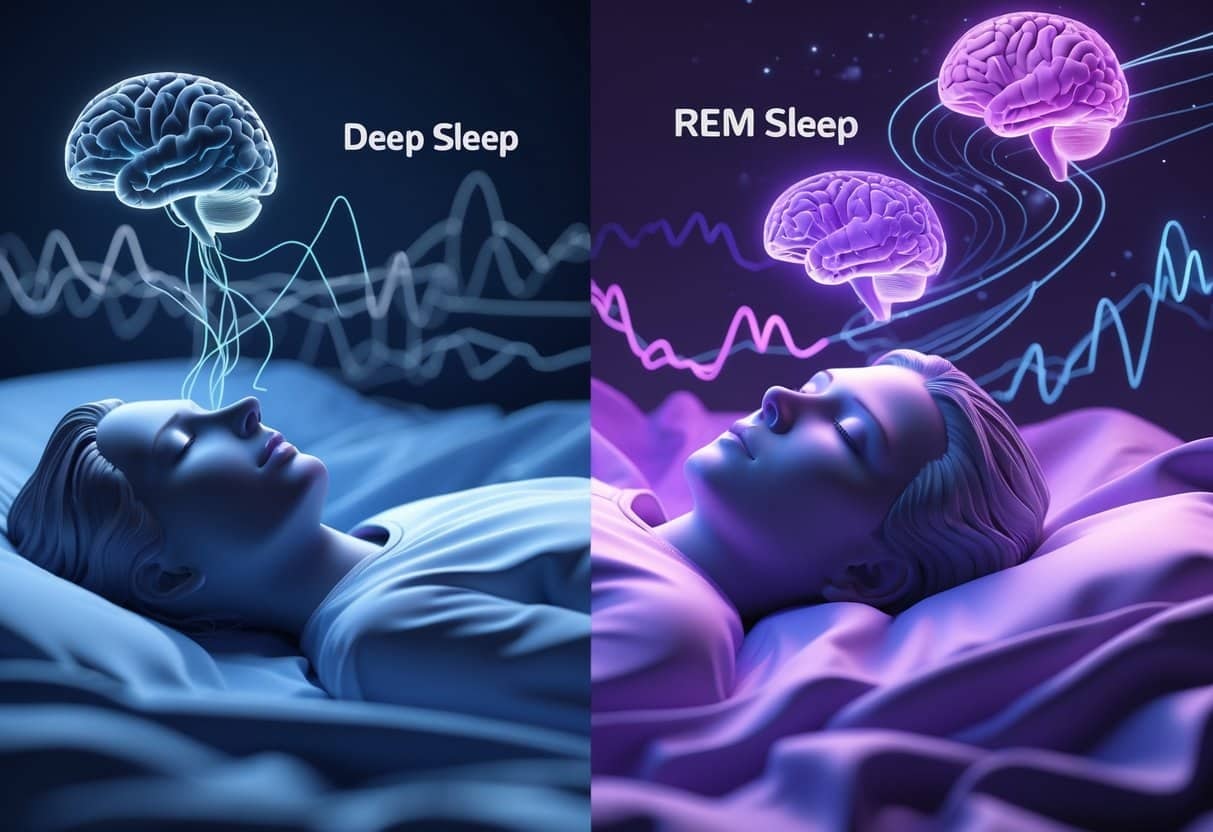
DSIP's original characterization was based on its ability to increase delta-wave (slow-wave, Stage 3/4) sleep in animal models. Research has examined its effects on:
- Delta wave amplitude and duration
- REM sleep architecture
- Sleep-wake cycle entrainment
- Circadian rhythm modulation
The mechanism appears to involve modulation of hypothalamic sleep-regulatory circuits rather than direct sedation, distinguishing DSIP from classical hypnotics.
Neuroendocrine Regulation
DSIP has been shown to modulate the release of multiple pituitary hormones in preclinical models:
- LH (Luteinizing Hormone): DSIP stimulates LH release, implicating it in HPG axis regulation
- GH (Growth Hormone): DSIP has been shown to stimulate GH release in some models
- TSH (Thyroid-Stimulating Hormone): Modulation of thyroid axis has been reported
- ACTH and Cortisol: DSIP appears to attenuate stress-induced ACTH and corticosterone elevation
Stress Response Attenuation
One of the most studied aspects of DSIP is its ability to attenuate the neuroendocrine stress response. Preclinical studies have demonstrated that DSIP reduces corticosterone elevation in response to acute and chronic stress, suggesting a role in HPA axis regulation.
Antioxidant Properties
DSIP contains a tryptophan residue that may contribute to antioxidant activity. Research has examined DSIP's effects on lipid peroxidation and oxidative stress markers in preclinical models.
Opioid System Interaction
Some research has suggested DSIP interacts with opioid receptors or modulates endogenous opioid peptide activity, which may contribute to its analgesic and stress-attenuating properties.
Research Applications
Sleep Architecture Research
DSIP is primarily studied as a tool for investigating sleep regulatory mechanisms. Its ability to selectively enhance slow-wave sleep without the sedative profile of classical hypnotics makes it valuable for dissecting the neurobiological basis of sleep stages.
Circadian Rhythm Research
DSIP has been studied in models of circadian disruption, including jet lag models and shift-work paradigms in rodents. Its effects on melatonin secretion and circadian gene expression have been examined.
HPA Axis and Stress Research
DSIP's attenuation of stress-induced corticosterone elevation makes it a useful tool for studying HPA axis regulation and stress resilience mechanisms.
Neuroendocrine Research
DSIP's effects on LH, GH, and TSH secretion make it a research tool for studying hypothalamic-pituitary axis regulation and the integration of sleep and endocrine function.
Antinociception Models
Preclinical studies have examined DSIP in pain models, with some evidence of analgesic effects potentially mediated through opioid system interactions.
Aging and Longevity Research
DSIP has been studied in aged rodent models for its effects on sleep quality, neuroendocrine function, and stress resilience — areas that decline with age and are associated with accelerated aging phenotypes.
Reconstitution
DSIP is supplied as a lyophilized powder requiring reconstitution with bacteriostatic water (BAC water).
Suggested reconstitution:
- 5 mg vial + 1 mL BAC water → 5 mg/mL (5,000 mcg/mL)
- 10 mg vial + 2 mL BAC water → 5 mg/mL (5,000 mcg/mL)
- 10 mg vial + 5 mL BAC water → 2 mg/mL (2,000 mcg/mL)
Use our Reconstitution Calculator for precise volume calculations. See our General Reconstitution Guide for sterile technique.
Dosing Reference (Preclinical Models)
| Model | Dose Range | Route | Frequency |
|---|---|---|---|
| Sleep architecture | 30–100 nmol/kg | IV / ICV | Acute or chronic |
| HPA axis / stress | 50–200 mcg/kg | SC / IV | Once daily |
| Neuroendocrine | 50–100 mcg/kg | SC | Once daily |
| Antinociception | 100–500 mcg/kg | SC / IP | Acute |
Note: DSIP has been studied at nanomolar doses in some models, reflecting its high potency at central targets. Dose-response relationships should be carefully characterized for each research application.
Storage
| State | Conditions | Duration |
|---|---|---|
| Lyophilized | −20°C, protected from light | 24+ months |
| Reconstituted | 2–8°C, protected from light | Up to 21 days |
DSIP contains a tryptophan residue that is susceptible to oxidation. Protect reconstituted solutions from light and oxygen exposure. Aliquoting is strongly recommended.
Availability at Peptide-Labs
DSIP 10 mg is currently coming soon at Peptide-Labs. We are completing quality verification and third-party CoA testing before release. Join the waitlist to be notified when DSIP becomes available.
Research Use Only
DSIP is intended solely for in vitro research and preclinical laboratory use. It is not approved for human consumption, veterinary use, or clinical application in Canada. All research must be conducted by qualified professionals in compliance with applicable regulations.
Explore Topics
Written by
Peptide-Labs Research Team
Content creator and writer sharing insights and stories.