Best Peptides for Longevity Research in Canada (2026 Guide)
A comprehensive guide to the top research peptides for longevity and anti-aging research available in Canada — covering SS-31, MOTS-C, NAD+, GHK-Cu, BPC-157, and more, with mechanisms and research evidence.

Best Peptides for Longevity Research in Canada (2026 Guide)
Longevity research has undergone a paradigm shift in the past decade. What was once the domain of caloric restriction and telomere biology has expanded to encompass mitochondrial medicine, NAD+ metabolism, senolytic compounds, and peptide-based interventions targeting the fundamental hallmarks of aging. Canada's research community has been at the forefront of this expansion, with growing demand for high-purity research compounds from domestic suppliers.
This guide covers the most studied peptides and small molecules for longevity research, their mechanisms, the evidence base, and how to source them in Canada.
The Hallmarks of Aging: A Research Framework
To understand why specific peptides are prioritized in longevity research, it helps to map them against the established hallmarks of aging (López-Otín et al., 2013, updated 2023):
- Genomic instability
- Telomere attrition
- Epigenetic alterations
- Loss of proteostasis
- Disabled macroautophagy
- Deregulated nutrient sensing
- Mitochondrial dysfunction ← Primary target of SS-31, MOTS-C, NAD+
- Cellular senescence
- Stem cell exhaustion
- Altered intercellular communication
- Chronic inflammation
- Dysbiosis
The peptides covered in this guide primarily target hallmarks 6, 7, and 11 — the metabolic and mitochondrial axes of aging.
1. SS-31 (Szeto-Schiller Peptide) — Mitochondrial Membrane Protector
Target hallmark: Mitochondrial dysfunction
SS-31 (D-Arg-Dmt-Lys-Phe-NH₂) is the most targeted mitochondrial intervention in the current research landscape. By binding cardiolipin on the inner mitochondrial membrane, SS-31 preserves electron transport chain supercomplex organization, reduces ROS production, and restores ATP synthesis efficiency.
Why it leads longevity protocols:
- Directly addresses the most universal hallmark of cellular aging
- Restores mitochondrial cristae morphology in aged cells
- Improves exercise capacity and cardiac function in aged rodent models
- Has entered human clinical trials (as elamipretide) for heart failure
Research evidence level: Strong preclinical; Phase II/III clinical data emerging
Read the full SS-31 research guide →
2. MOTS-C — Mitochondrial-Derived Metabolic Regulator
Target hallmark: Deregulated nutrient sensing, mitochondrial dysfunction
MOTS-C is a mitochondrial-derived peptide that translocates to the nucleus under metabolic stress, acting as a retrograde signal that regulates nuclear gene expression. Its primary effects are on AMPK activation, glucose metabolism, and insulin sensitivity.
Why it matters for longevity research:
- Mimics the metabolic effects of exercise at the molecular level
- Activates AMPK — a master regulator of cellular energy homeostasis and longevity pathways
- Improves insulin sensitivity in aged and obese preclinical models
- Declines with age in both rodents and humans — making it a potential biomarker and intervention target
Research evidence level: Strong preclinical; early human data
Read the full MOTS-C research guide →
3. NAD+ — The Longevity Coenzyme
Target hallmark: Deregulated nutrient sensing, mitochondrial dysfunction, epigenetic alterations
NAD+ is arguably the most studied longevity-related molecule of the past decade. Its decline with age — driven by increased consumption by CD38, PARP enzymes, and NNMT — is associated with virtually every hallmark of aging.
Why NAD+ is central to longevity research:
- Substrate for sirtuins (SIRT1–7): the primary epigenetic regulators of aging
- Required for PARP-mediated DNA repair
- Essential for mitochondrial function via the ETC
- Declines 50%+ between ages 20 and 60 in human tissue
Research approaches:
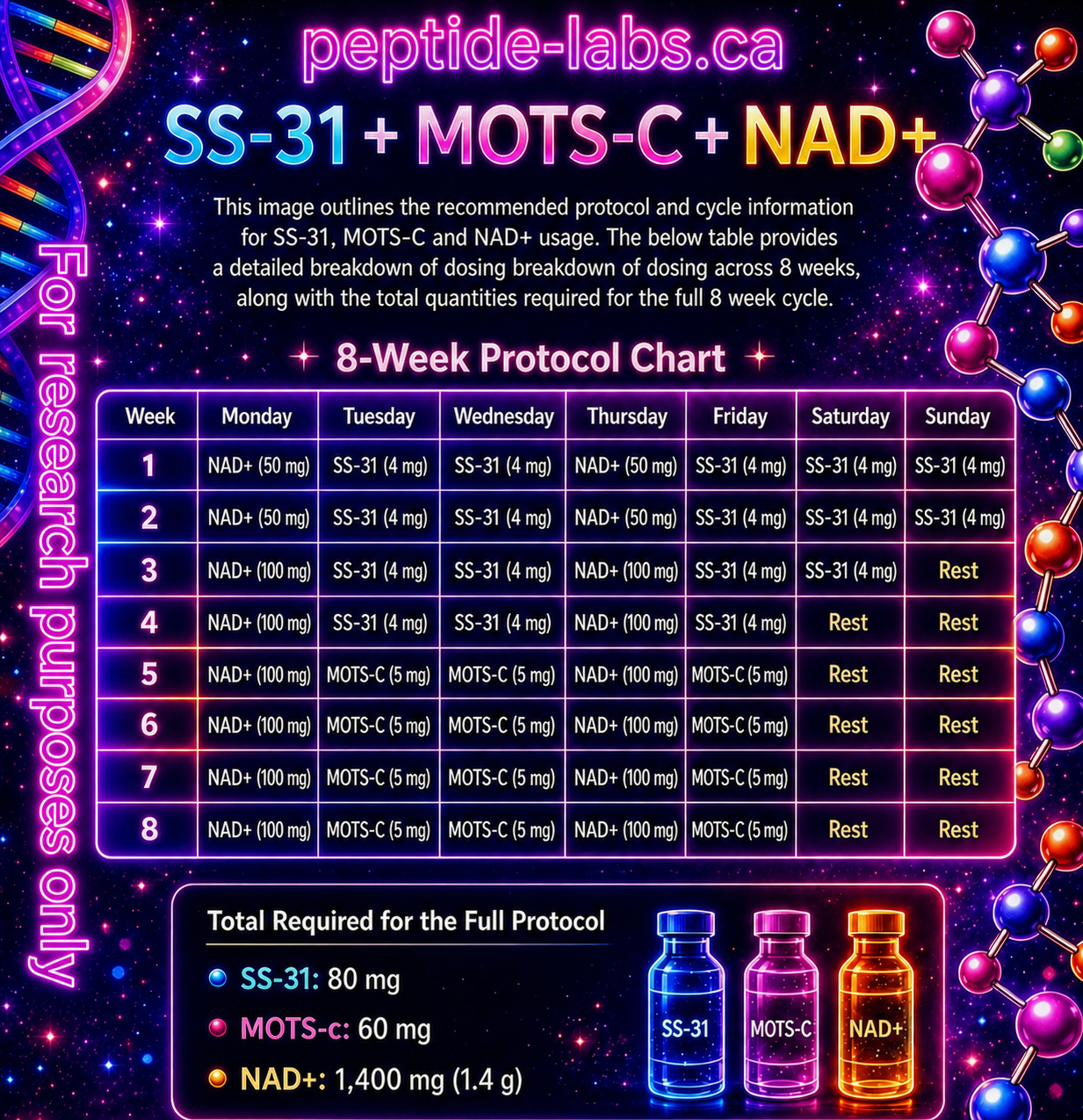
- Direct NAD+ administration (as used in the SS-31 + MOTS-C + NAD+ protocol)
- NAD+ precursors: NMN, NR
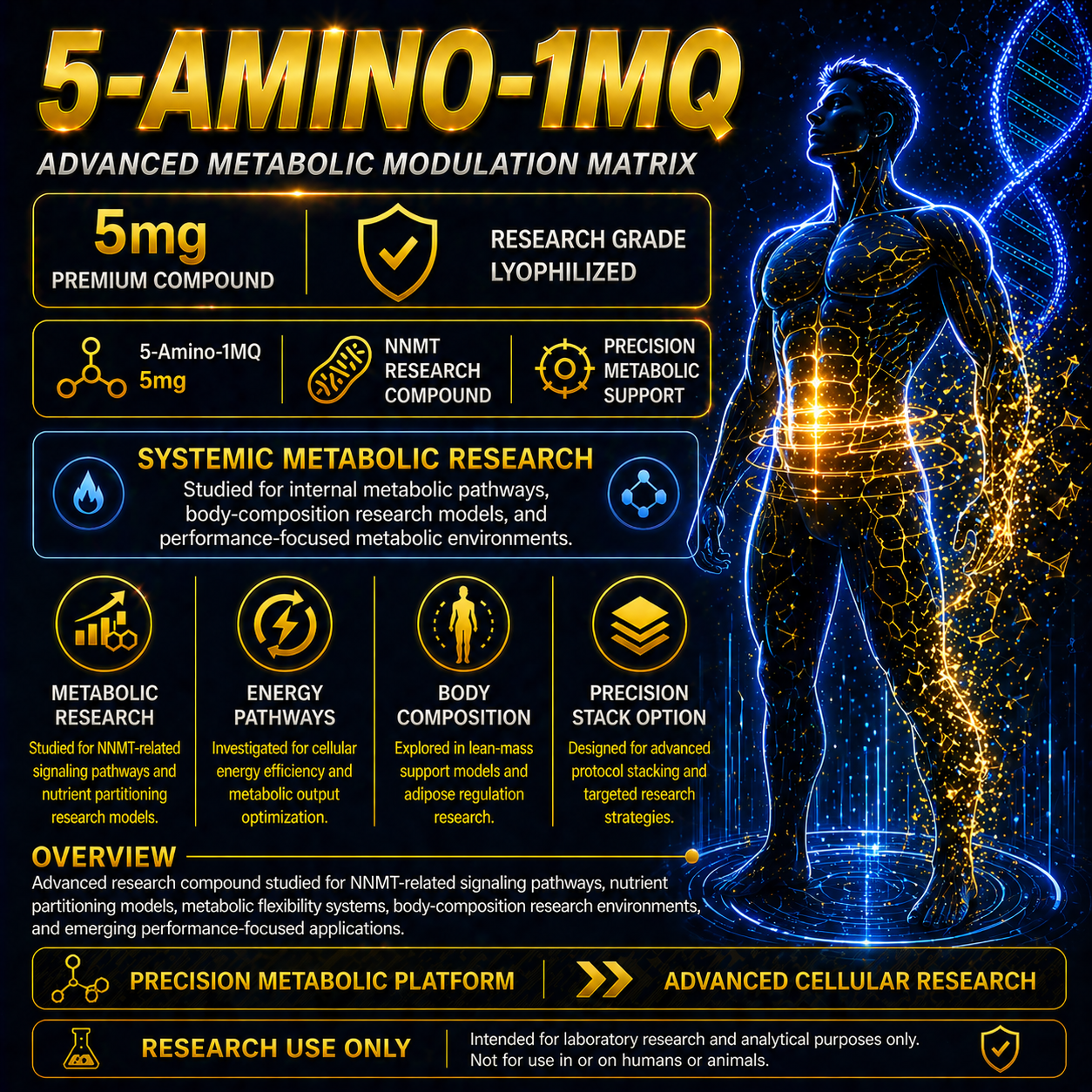
- NNMT inhibition: 5-Amino-1MQ (indirect NAD+ elevation)
Research evidence level: Very strong preclinical; multiple human trials ongoing
4. GHK-Cu (Copper Peptide) — Tissue Repair and Epigenetic Regulator
Target hallmark: Epigenetic alterations, loss of proteostasis, chronic inflammation
GHK-Cu (Gly-His-Lys copper complex) is a naturally occurring tripeptide that declines with age. Its research profile spans wound healing, collagen synthesis, anti-inflammatory signalling, and — most intriguingly — epigenetic regulation.
Why GHK-Cu is studied in longevity research:
- Resets gene expression patterns toward a younger phenotype in aged fibroblasts
- Upregulates over 30 genes associated with tissue repair and regeneration
- Downregulates genes associated with inflammation and cancer progression
- Activates TGF-β and VEGF pathways for tissue remodelling
Research evidence level: Strong in vitro; growing in vivo data
Read the full GHK-Cu research guide →
5. BPC-157 — Systemic Tissue Repair Peptide
Target hallmark: Loss of proteostasis, chronic inflammation, altered intercellular communication
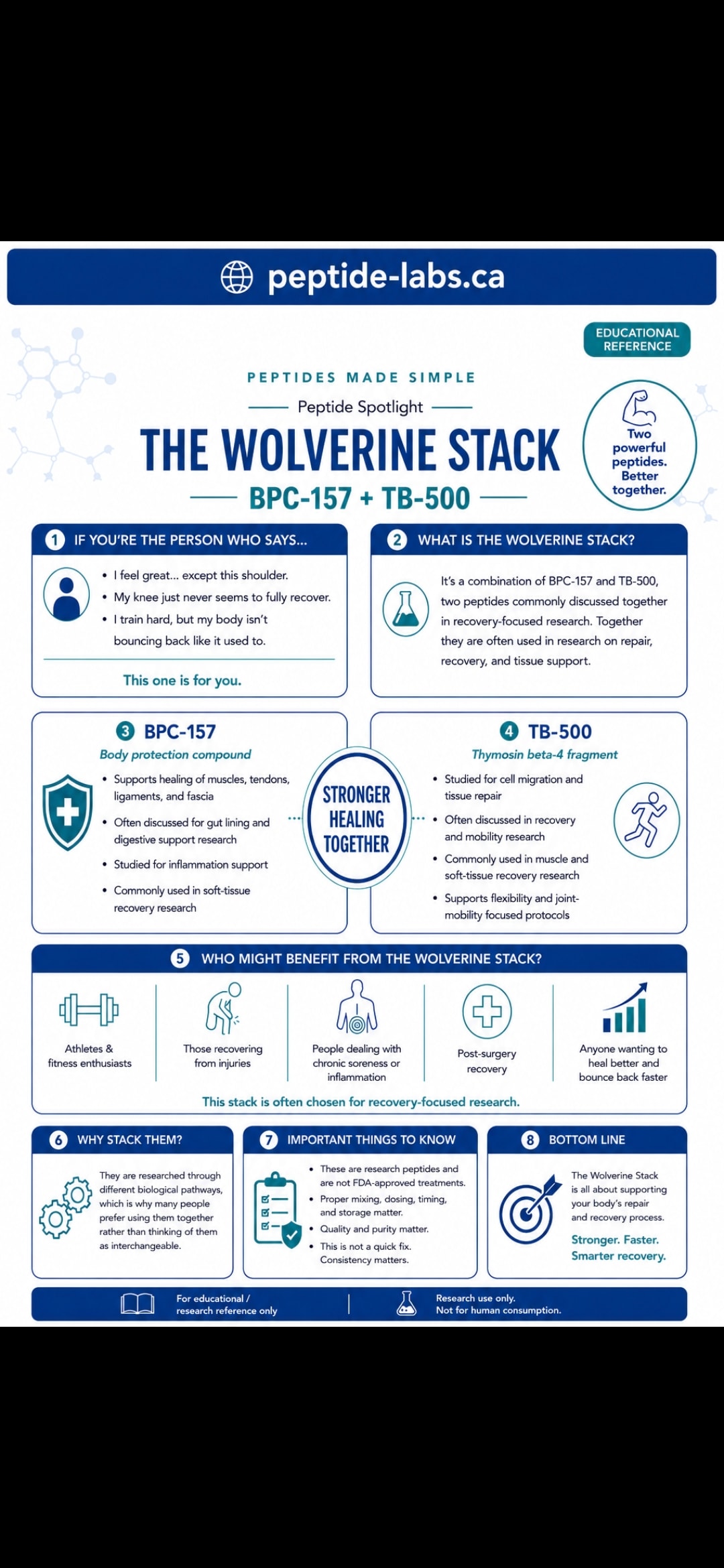
BPC-157 (Body Protection Compound 157) is a pentadecapeptide derived from a gastric juice protein. Its research profile is unusually broad — encompassing gut healing, tendon and ligament repair, neuroprotection, and systemic anti-inflammatory effects.
Why BPC-157 is relevant to longevity research:
- Promotes angiogenesis via VEGF upregulation — critical for tissue perfusion in aging
- Activates the NO-cGMP pathway for vascular health
- Demonstrates neuroprotective effects in models of traumatic brain injury and neurotoxicity
- Accelerates healing of multiple tissue types simultaneously
Research evidence level: Strong preclinical across multiple organ systems
Read the BPC-157 reconstitution guide →
6. Selank — Neurological Stress Resilience
Target hallmark: Chronic inflammation, altered intercellular communication
Selank's role in longevity research is less direct than mitochondrial compounds, but its effects on neuroinflammation, BDNF upregulation, and stress resilience are increasingly recognized as relevant to healthy aging. Chronic psychological stress accelerates multiple hallmarks of aging — Selank's ability to attenuate the neuroendocrine stress response makes it a useful research tool in this context.
Read the full Selank research guide →
7. Semax — Neuroprotection and Cognitive Longevity
Target hallmark: Chronic inflammation, loss of proteostasis (neuronal)
Semax's neuroprotective profile — particularly its BDNF and NGF upregulation — is directly relevant to cognitive longevity research. Neurotrophic factor decline is a hallmark of brain aging, and Semax's ability to restore BDNF levels in aged rodent models makes it a valuable research tool.
Read the full Semax research guide →
Longevity Peptide Comparison Table
| Compound | Primary Target | Hallmark | Evidence Level | Available |
|---|---|---|---|---|
| SS-31 | Cardiolipin / IMM | Mitochondrial dysfunction | ★★★★★ | Coming Soon |
| MOTS-C | AMPK / nuclear gene expression | Nutrient sensing | ★★★★☆ | In Stock |
| NAD+ | Sirtuins / ETC / PARP | Multiple | ★★★★★ | In Stock |
| GHK-Cu | TGF-β / epigenetics | Epigenetic alterations | ★★★★☆ | In Stock |
| BPC-157 | VEGF / NO pathway | Proteostasis / inflammation | ★★★★☆ | In Stock |
| Selank | BDNF / GABAergic | Neuroinflammation | ★★★☆☆ | Coming Soon |
| Semax | BDNF / NGF / MC4R | Neuroinflammation | ★★★★☆ | Coming Soon |
| 5-Amino-1MQ | NNMT / NAD+ indirect | Nutrient sensing | ★★★☆☆ | Coming Soon |
Sourcing Research Peptides in Canada
Canadian researchers face unique challenges when sourcing research peptides:
-
Domestic supply chain: Importing peptides from overseas suppliers introduces cold-chain risks, customs delays, and quality uncertainty. Domestic Canadian suppliers like Peptide-Labs maintain cold-chain integrity from synthesis to delivery.
-
Third-party CoA verification: Every batch should be accompanied by an independent Certificate of Analysis (CoA) confirming purity by HPLC and identity by mass spectrometry. View our CoA page for current batch documentation.
-
Purity standards: Research-grade peptides should be ≥99% purity by HPLC. Lower purity compounds introduce confounding variables and may contain bioactive impurities.
-
Bacteriostatic water: Always reconstitute with pharmaceutical-grade bacteriostatic water (BAC water), not sterile water. BAC water contains 0.9% benzyl alcohol as a preservative, extending the usable life of reconstituted peptides to 28 days.
See our How to Buy Research Peptides in Canada guide for a complete sourcing checklist.
Recommended Longevity Research Protocols
For researchers designing multi-compound longevity protocols, our SS-31 + MOTS-C + NAD+ 8-Week Protocol provides a structured framework with phased compound administration, dosing tables, and total quantity calculations.
Research Use Only
All compounds listed in this guide are intended solely for in vitro research and preclinical laboratory use. They are not approved for human consumption, veterinary use, or clinical application in Canada. This guide is provided as a reference for qualified research professionals only.
Explore Topics
Written by
Peptide-Labs Research Team
Content creator and writer sharing insights and stories.